October 06, 2026


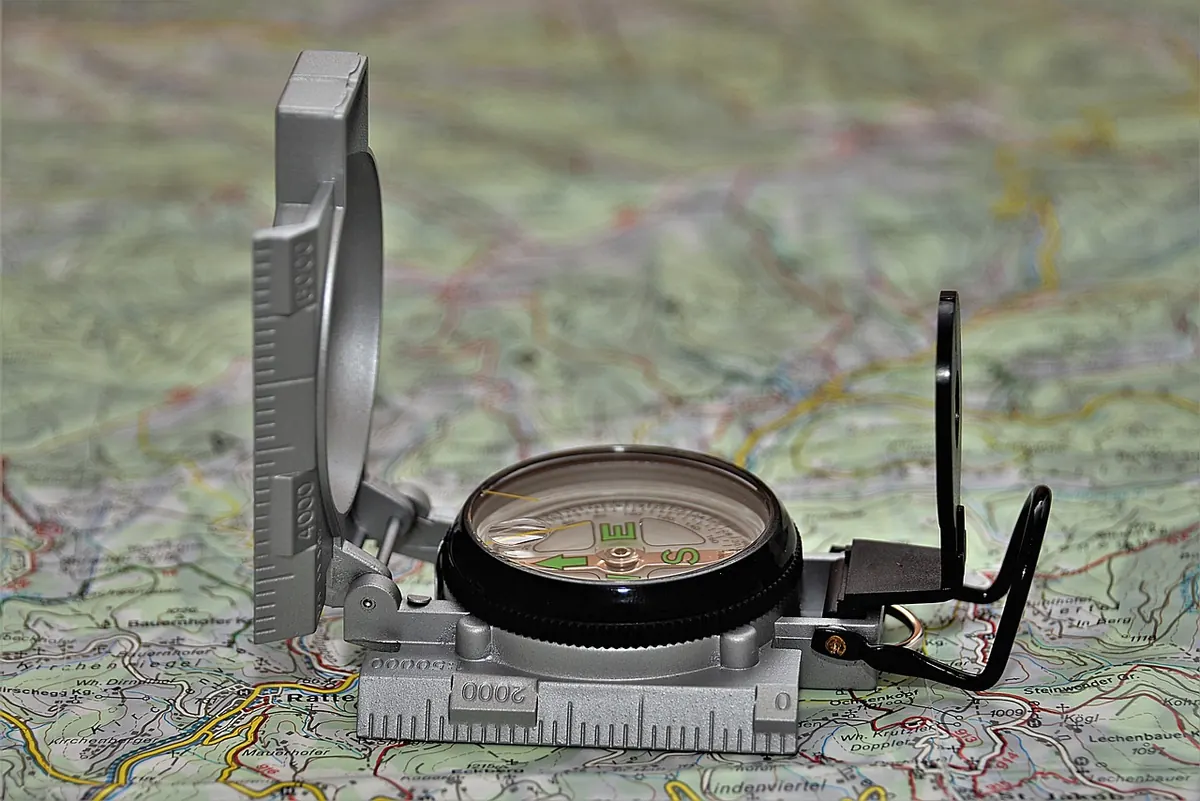
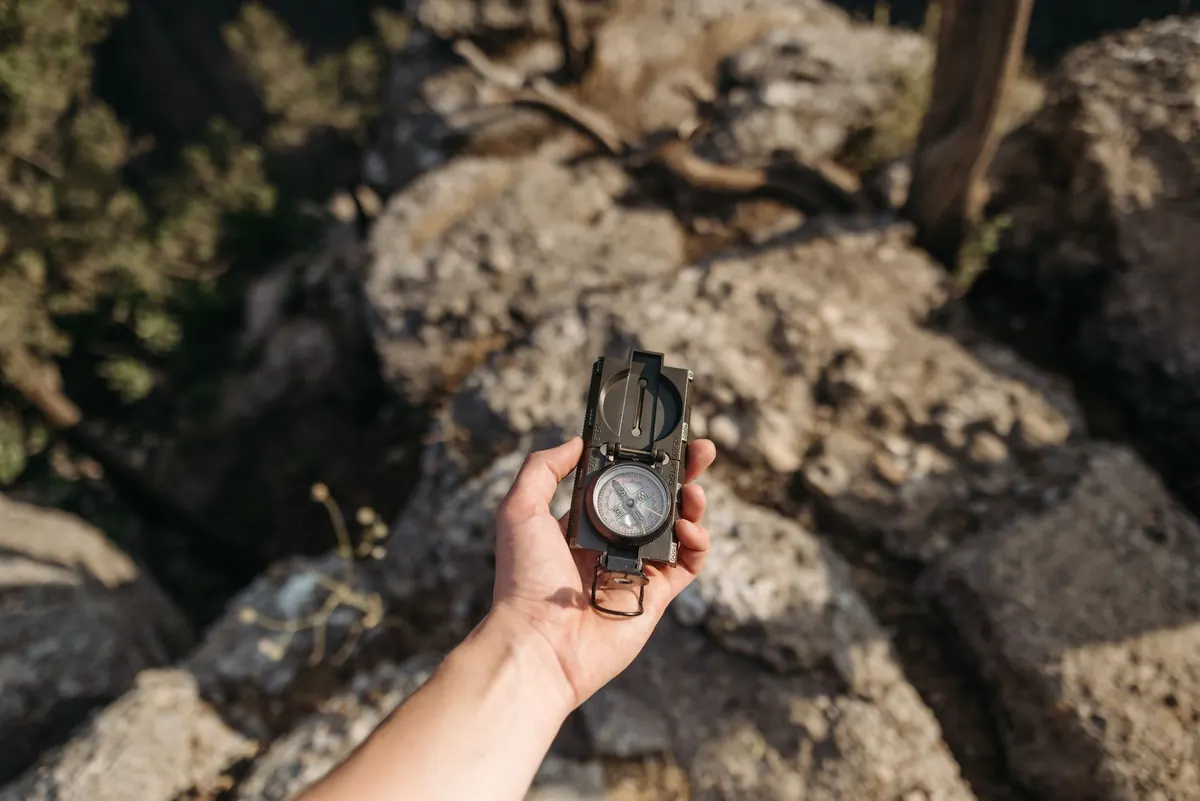
A signal mirror weighs less than a candy bar and never needs charging. That is the whole argument for learning ground-to-air signaling: when your phone is dead, wet, or out of range, a handful of simple, old-fashioned tools can still reach a search aircraft flying a grid pattern a mile away.
Searchers in the air are looking for things that don't belong—sharp flashes, straight lines, unnatural colors, smoke where there shouldn't be any. Your job is not to look like a person in distress. Your job is to look like an anomaly that a pilot can spot in three seconds at 500 feet.
A dedicated signal mirror with a sighting hole is best, but a phone screen (switched off), a metal pot lid, a watch face, a compact, or a sheet of foil will all flash. In clear air, a reflected flash can be seen farther than almost anything else you carry—often from many miles away, well beyond the point where a waving arm disappears into the terrain.
Aim it like this: hold the mirror near your eye and extend your other hand toward the aircraft. Tilt the mirror until the reflected sunlight lands on your fingertips, then sweep the flash slowly across the horizon in short arcs. If you can't aim precisely, just sweep—an unpiloted flash still reads as a signal, and pilots are trained to investigate it. Don't hold a steady beam on the cockpit, though; a continuous blinding glare is unhelpful to someone trying to fly.
A pealess plastic whistle costs almost nothing, won't freeze to your lips, and works when your throat is raw. Three blasts is the universal distress call. Sound carries farther than shouting, especially in still air and open terrain, and it costs you almost no energy—which matters a great deal on day three.
Whistles do poorly in wind, heavy rain, and dense conifer forest, where needles and trunks soak up sound. That's fine. Use it in bursts: three blasts, then stop and listen for a full minute. Searchers on foot often hear you before they see you.
From the air, small things vanish. A pilot at 1,000 feet sees a person as a speck, so your ground signal has to be big—letters at least three metres tall with strokes half a metre wide—and placed in the most open ground you can reach. Ridges, lake shores, meadows, cut blocks, and frozen lakes are ideal. Under a tree canopy, nothing you build will be seen.
Contrast does the work. Dark logs on snow, pale rocks on dark soil, a bright tarp stretched between stakes, a line of trampled snow that casts a long shadow. Build your signal so it reads both from directly overhead and at the low sun angles of morning and evening, when shadows lengthen and make your lines pop.
These symbols are widely understood by pilots and search teams:
In deep snow, you don't need materials at all. Walk a huge X, an arrow, or a set of parallel lines in a meadow and let the shadowed trenches speak for you. Drag a branch behind you to widen the lines.
Smoke is the most visible daytime signal in forest and brush country, and at night a single fire can be spotted from many miles. Three fires, spaced a few dozen paces apart in a straight line or triangle, is the signal that means distress rather than a campfire.
Build your fires in the open—on a gravel bar, a rock outcrop, a clearing—not tucked under branches that will swallow the column. Keep three ready-to-light piles of tinder and fuel built in advance so you're not gathering wood while the aircraft passes. Add green boughs, damp leaves, or wet grass for thick white smoke, which shows best against dark timber. Oil-soaked rags or rubber give black smoke that reads well against snow or pale ground.
One caution that matters more than any signal: a fire in dry country can become the emergency instead of the solution. Clear the ground around it, keep water and dirt within arm's reach, and follow local fire restrictions. If it's tinder-dry and windy, rely on the mirror.
Movement catches the human eye better than anything. Stand in the clearest spot you can find, and move slowly and rhythmically—both arms raised in a wide V, waving in big deliberate arcs. That posture reads as distress from a long way off.
Be careful with the friendly wave. A casual one-armed wave from someone walking a trail reads as "hello, I'm fine," and it can send a helicopter home. If you need help, make it unmistakable: both arms up in a V, or arms crossed overhead and uncrossed repeatedly.
Wear the brightest layer you have and sit on top of something dark, or spread a jacket or tarp on the ground beside you. Orange, red, and yellow beat every camouflage pattern ever printed.
Three is the number that means help. Three whistle blasts. Three fires. Three flashes. Three shouts, three taps on a metal pot. Send the set, then stay quiet for a minute and listen. If you hear three of anything back, someone knows where you are—keep answering and keep your visible signal in place.
Once you've built a signal site, stay with it. Searchers cover ground systematically, and a person who wanders between sightings is far harder to find than a fixed mark on the landscape. Leave an arrow in the dirt showing which way you went if you must move.
Signaling doesn't replace shelter, water, and warmth—exposure ends more wilderness emergencies than delays in being seen. Build your signal, then improve your camp. When you hear a helicopter, move to open ground well clear of trees and stay low until it lands; don't run toward it. Rotor wash throws loose gear and debris, and the pilot needs a clear approach.
Pack the cheap stuff: a pealess whistle, a small signal mirror, a bright bandana or tarp, a lighter in a waterproof bag, and a headlamp. Keep the whistle and mirror on a lanyard around your neck, not buried in a pack pocket you've taken off.
Then practise once. On a clear afternoon, from a hilltop, aim a mirror at a friend a few hundred metres away and see how quickly they notice. Lay out an X of branches in a field and look at it from up high. On your next hike, note the open ground you'd use if you had to signal from here—because the best time to plan your signal site is while you're still warm, dry, and walking out.
Photo: kaboompics / Pixabay
A guiding light for outdoor adventures..
Copyright © 2026 Briar Beacon. All rights reserved. Briar Beacon.